Although often overshadowed by the Ancient Greeks, the Ancient Romans also had a rich culture and produced many must-read books.
As I’ve mentioned before on this blog, one of my goals in life is to be well-read. I’m making a list of the books I feel that I need to read to achieve that goal, and the ancient Greeks and Romans are definitely on that list.
A while back I wrote a post titled, “17 Must-Read Books by the Ancient Greeks”, and now in this post I enumerate the must-read books by Ancient Romans. Specifically, the ancient Roman philosophers.
I find ancient Roman history fascinating, and I think that knowing a little about that history is important to fully comprehend the philosophers who were writing at the time. Therefore, I’m going to start by giving you some brief highlights of Roman history. Then. I’m going to share with you the books by ancient Roman philosophers that are must-read.
Let’s get started.
A Brief History of Ancient Rome
The term “Ancient Rome” encompasses the time-period beginning with the founding of the city of Rome in 753 BCE and ending with the collapse of the Western Roman Empire in 476 CE. This time-period can be divided into three phases:
- The Roman Kingdom (753 BCE–509 BCE)
- The Roman Republic (509 BCE–27 BCE)
- The Roman Empire (27 BCE–476 CE)
Here’s a little bit about each of these time periods:
The Roman Kingdom
This time period–which lasted for almost 250 years–is also referred to as the regal period of ancient Rome, and it is shrouded in myth. During this time, the city of Rome and its territories were ruled by kings. According to legend, there were seven kings in all.
Rome’s Foundation Myth
Pursuant to Rome’s foundation myth, Rhea Silvia–a Vestal Virgin–was raped by Mars, the Roman god of war. As a result, she became pregnant with twins, whom she named Romulus and Remus. Because Vestal Virgins were supposed to remain celibate, Rhea was sentenced to death.
The baby twins were placed in a basket and were left to float away down the Tiber. However, a she-wolf found the twins and suckled them until they were discovered by a shepherd who–along with his wife–took them in and raised them.
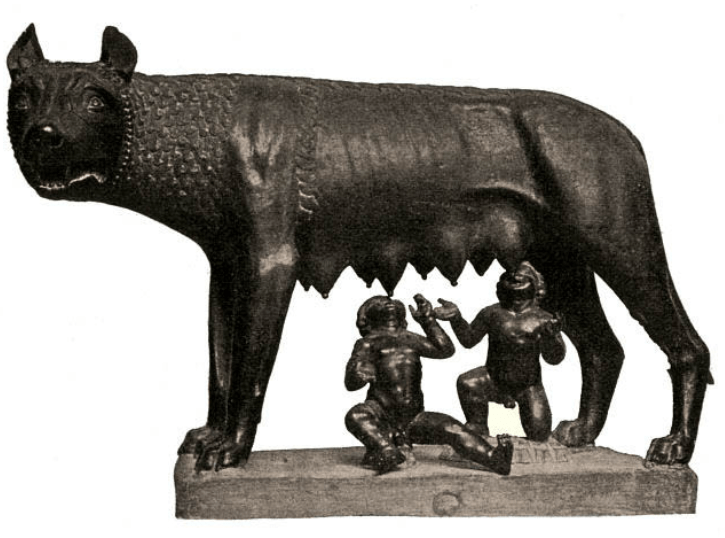
When they grew up, the twins decided to build a city. Nonetheless, they disagreed over which of the seven hills (Aventine, Caelian, Capitol, Esquiline, Palatine, Quirinal and Viminal) they should build it on. This led to a fight in which Romulus killed Remus.
Romulus founded a city in 753 BCE. He named it Rome, after himself, and made himself king. To populate the town, Romulus turned it into an asylum and welcomed refugees, exiles, and fugitives. Here’s what the historian Livy wrote in his “Early History of Rome”:
“Hither fled for refuge all the rag-tag-and-bobtail from the neighbouring peoples: some free, some slaves, and all of them wanting nothing but a fresh start. That mob was the first real addition to the City’s strength, the first step to her future greatness”
A line of Sabine (as in, the Rape of the Sabine Women), Latin and Etruscan kings followed–all belonging to earlier Italian civilizations. The seven legendary kings of Rome were as follows:
- Romulus;
- Numa Pompilius;
- Tullus Hostilius;
- Ancus Martius;
- Lucius Tarquinius Priscus;
- Servius Tullius; and
- Lucius Tarquinius Superbus.
The Rape of Lucretia
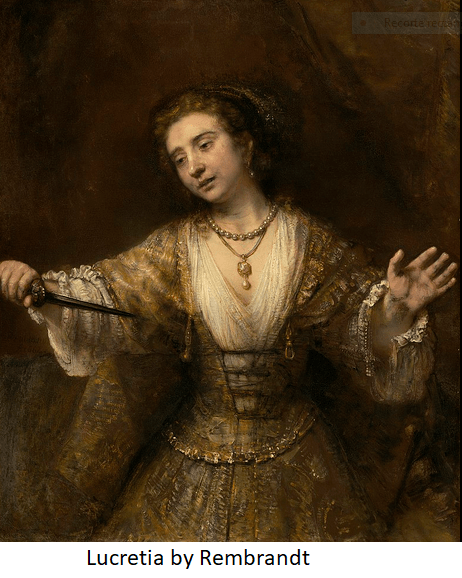
The Roman kingdom came to an end when a son of King Lucius Tarquinius Superbus—the seventh king and a morally bankrupted tyrant–, raped the Roman noblewoman Lucretia. Lucretia told her father and her husband what had happened, and then killed herself.
This inspired a popular revolt which overthrew the monarchy and led to the Roman Republic.
The Roman Republic
The Roman Republic began in 509 BCE, following the overthrow of the last of Rome’s seven kings. The idea behind the Republic–formed from the Latin words for “thing” (res) and “of the people” (publica)–was that power shouldn’t be concentrated in the hands of one man.
They achieved this to some extent by creating three different branches of government. Kingship was replaced with two annually elected magistrates called consuls. The other two branches were the Senate–made up of the patrician, or aristocratic class–, and the Assemblies–made up of the plebeians, or the common people.
Under the Republic, Rome became, first, the master of central Italy. It then pushed forward its frontier through conquest and colonization. After the Pyrrhic War (280–275 BCE) against Greek towns in the south, Rome became the unquestioned master of Italy. It then went on to conquer the Mediterranean and beyond.
Three of the most notable events that occurred during the time of the Republic were the Sack of Rome in 387 BCE; the Punic Wars; and the civil wars that ended the Republic.
The Sack of Rome
The Gallic Sack of Rome, which occurred after the Romans were defeated at the Battle of the Allia in 387 BCE, was arguably the greatest trauma the Roman Republic had endured up to that point. The Gauls–led by the warlord Brennus-marched into Rome and commenced an orgy of rape and pillage.
A group of Romans fortified themselves atop the Capitoline Hill. After several months of siege, the Romans surrendered. They bribed the Gauls to go away so they could get their city back. Rome was rebuilt, but the defeat left deep wounds.
The Punic Wars
Rome’s success led it into conflict with Carthage, in northern Africa, for control of the Mediterranean. This conflict was known as the Punic Wars, a series of three wars fought between 264 and 146 BCE. Here’s a brief look at each one:
- The First Punic War broke out in Sicily in 264 BCE.
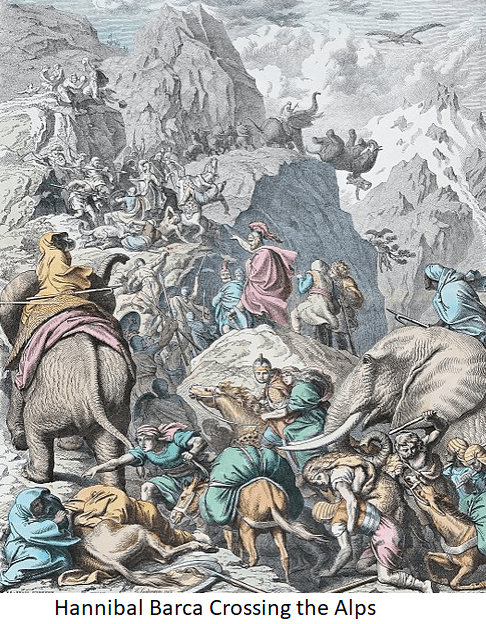
- The Second Punic War saw the Carthaginian general, Hannibal Barca crossing the Alps–riding elephants, no less–and invading mainland Italy.
- The Third Punic War was fought on Carthaginian territories. In 146 BCE the Romans stormed the city of Carthage, sacked it, destroyed it, and sold its remaining inhabitants into slavery.
The Civil Wars and the End of the Roman Republic
Before its end, the Roman Republic had conquered Greece, Spain, the North African coast, much of the Middle East, modern-day France, and even the remote island of Britain.
The end of the Roman Republic occurred because of a set of civil wars fought among the Roman elite. These civil wars were the following:
- Sulla’s First Civil War (88–87 BCE) and Sulla’s Second Civil War (82 – 81 BCE) stemmed from a power struggle between the politician-generals Gaius Marius and Lucius Cornelius Sulla.
- Caesar’s Civil War (49 – 45 BCE) was between Julius Caesar and Pompey the Great.
- The Final War of the Roman Republic (32 – 30 BCE) was between Octavian and Marc Antony and Cleopatra.
In 31 BCE, Octavian won the civil war against Marc Antony. This marked the end of the Roman Republic–which had lasted for almost 500 years–and the beginning of the Roman Empire.
The Roman Empire
In 27 BCE, Octavian–who had taken the title of Augustus–became the first emperor of Rome. He was granted the title of emperor willingly by the senate since he had brought stability to Rome after a long period of civil wars. Thus, the Roman Empire—which would eventually become the largest empire the ancient world had ever seen–began.
The Roman Empire reached its maximum extant in 117 CE, under Emperor Trajan. At this time, the empire spanned three continents including Asia Minor, northern Africa, and most of Europe.
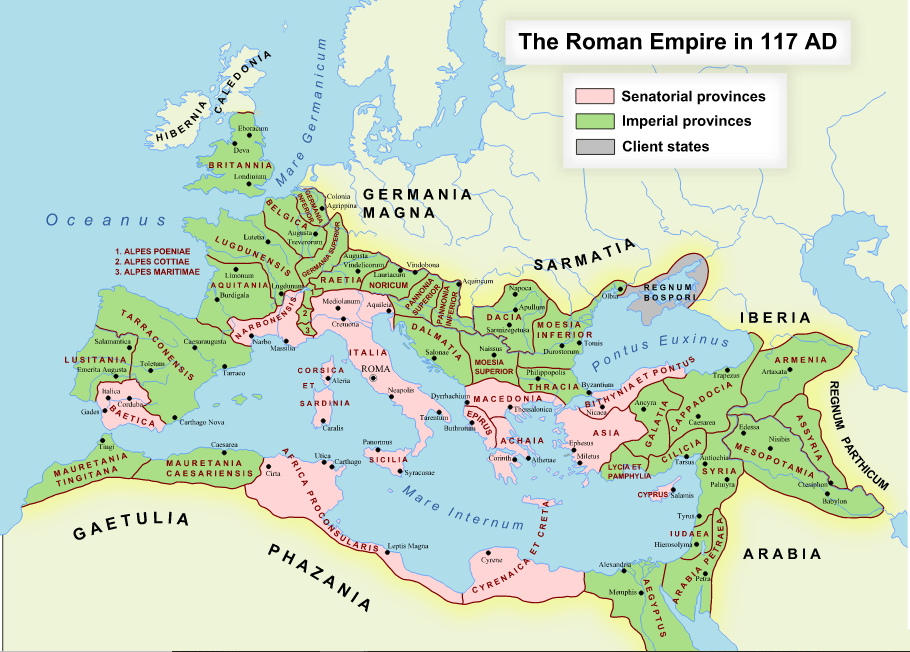
In 286 CE the Roman Empire was split in two–an eastern and a western empire–, each ruled by its own emperor. Ancient Rome came to an end with the fall of the Western Roman empire, which occurred when Emperor Romulus Augustus was deposed by the Germanic King Odoacer in 476 CE.
Three Must-Read Philosophy Books by Ancient Romans
The three must-read philosophy books which I’m going to recommend to you are the following:
There’s a brief summary of each or these works below.
On Obligations by Cicero
Marcus Tullius Cicero (106 – 43 BCE) was born in Arpinum, southeast of Rome, to a wealthy equestrian family. His life coincided with the decline and fall of the Roman Republic, and he left a vast body of work that gives us great insight into this period of time.
The Catilinarian Conspiracy
Cicero was a politician, consul, lawyer, philosopher, and one of Rome’s greatest orators. He was also a prolific writer of verse, letters, and works on philosophy, politics, and rhetoric. Through his own talents as an orator and statesman, Cicero rose through the ranks of Roman politics and became a Senator in 74 BCE.
Then, in 63 BCE, Cicero was elected Consul for the year—thus achieving the highest office in the Republic–, defeating patrician candidate Lucius Sergius Catiline. While serving as Consul, Cicero uncovered a plot conceived by Catiline to overthrow the Republic.
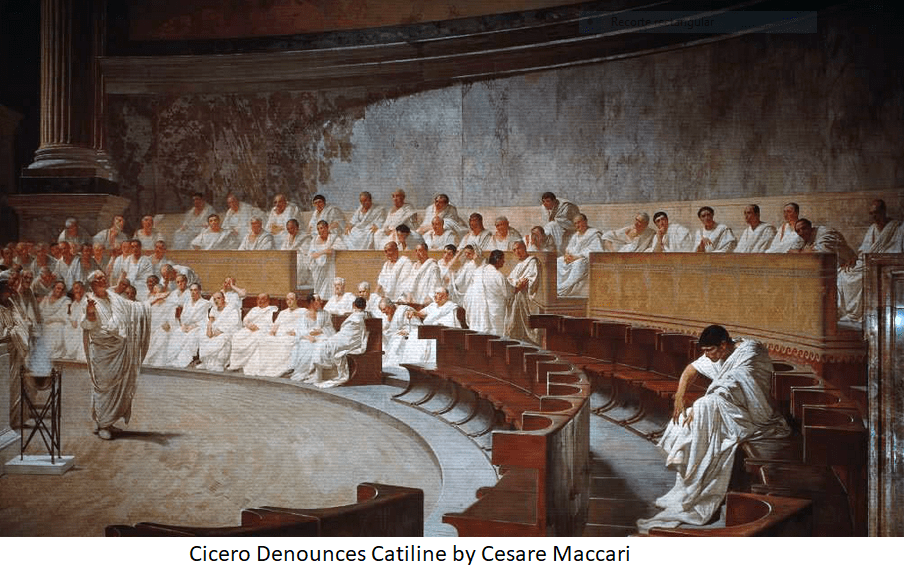
On Cicero’s orders, five of the conspirators were put to death without a trial. This gained Cicero wide acclaim, but also made him enemies.
Cicero’s Exile
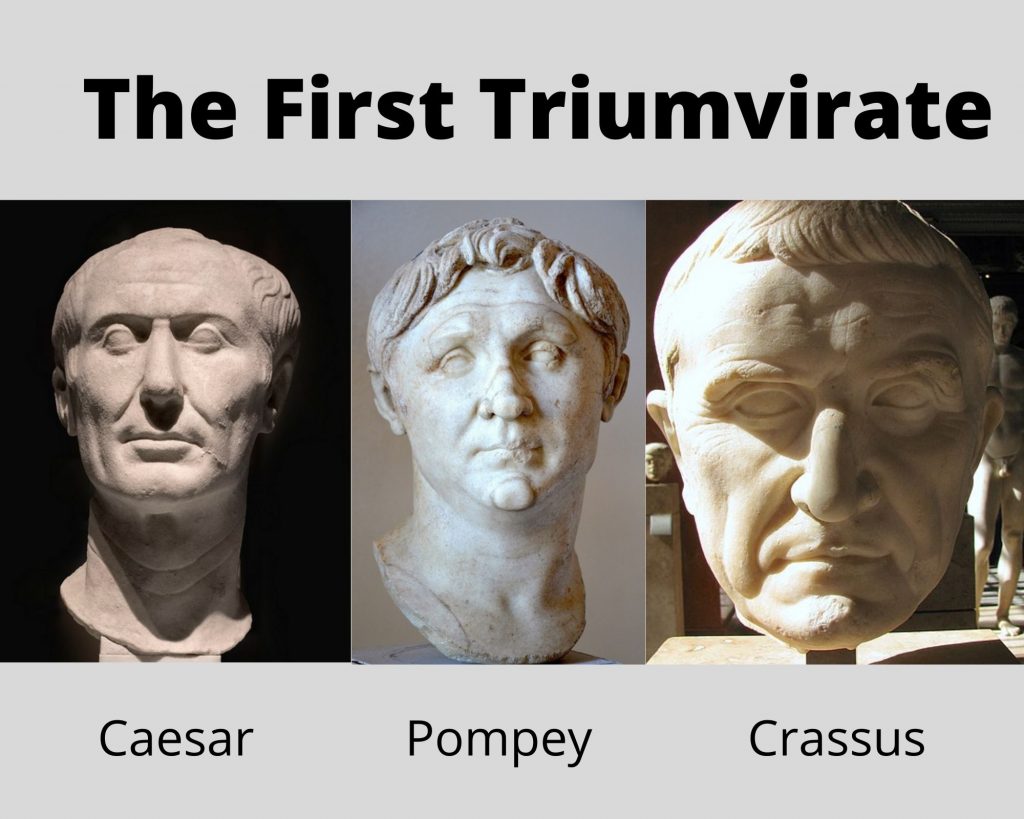
In 60 BCE, Julius Caesar, Pompey, and Crassus—a group that was later known as the First Triumvirate–took control of Roman politics. Here’s a little about each of these men:
- Gaius Julius Caesar was a renowned general and statesman who had been governor of Hispania Ulterior (the western part of the Iberian Peninsula).
- Marcus Lucinius Crassus was the wealthiest man in Rome. His biggest claim to fame was having squelched the slave rebellion led by Spartacus in southern Italy in 71 BCE.
- Gnaius Pompeius Magnus (Pompey): Pompey’s greatest success up to that point was putting down the pirates of the Mediterranean, which had plagued Rome’s merchant ships for over a generation.
Two years later, in 58 BCE, one of Cicero’s enemies managed to pass a law—that would apply retroactively—which stated that anyone who had a Roman citizen killed without a trial would be stripped of their citizenship. This law was designed to strike at Cicero.
Cicero was forced to go into exile. However, after roughly a year and a half of exile, the political conditions changed, and Cicero was allowed to return to Rome.
Caesar Crosses the Rubicon
The Fist Triumvirate ruled Rome until 53 BCE, when it collapsed. Two events led to the collapse of the triumvirate. First, Crassus died in battle. Then, Pompey’s wife–who was Julius Caesar’s daughter—died in childbirth.
At the time of the collapse of the triumvirate, Caesar was in Cisalpine Gaul, the region south of the Alps which he was governing. Caesar’s military campaign in Gaul was highly successful, and he was gaining in popularity and prestige. Alarmed by Caesar’s growing power, in 49 BCE, the Senate ordered Caesar to set aside his command.
Caesar had no intentions of doing so. Roman law stated that any provincial governor leading troops across the border back into Italy would be declared a public enemy. The Rubicon River was the border between Cisalpine Gaul and Italy. Caesar knew that crossing the Rubicon meant war with the Roman nobility, led by Pompey.
Caesar crossed the Rubicon, and civil war ensued. It was now Caesar and Pompey fighting for control of the Republic.
Cicero reluctantly backed Pompey and followed him to Greece, but Caesar and his forces won the war in 48 BCE, and Caesar was made dictator. Caesar promised to pardon Cicero, and Cicero returned to Rome.
The Death of Caesar and the Death of Cicero
Caesar’s victory was short-lived. On the Ides of March in 44 BCE he was murdered by a group of senators who feared that he planned to take the title of king.
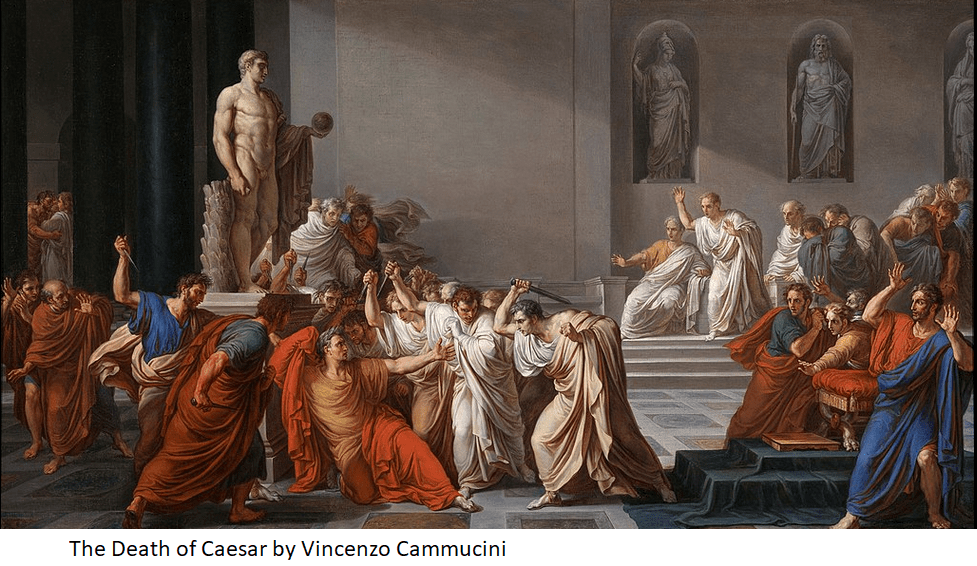
The murder led to another power struggle in which Mark Antony—who had been Caesar’s right hand–, Marcus Lepidus—a close ally of Caesar–, and Octavian—whom Caesar had named as his heir in his will–were the key players. Cicero made a series of speeches calling for the Senate to help Octavian, and denouncing Mark Antony as a public enemy.
When Antony, Lepidus, and Octavian agreed to share power—thus ushering in the Second Triumvirate–, Antony took his revenge. He had Cicero declared a public enemy and asked for his execution.
Cicero tried to flee but the Roman troops caught up to him and killed him. Thus, in 43 BCE, Cicero’s illustrious life came to an end. Antony had his head and his hands cut off and put them on display in Rome. The Republic had lost its greatest defender. Less than 20 years later, it would fall.
On Obligations
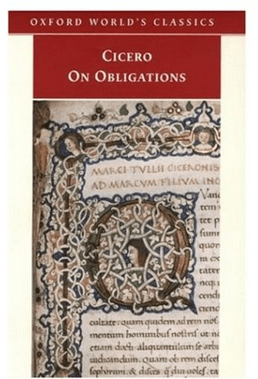 In addition to his role as a lawyer and a statesman, Cicero played a major role in bringing Greek philosophy into a Roman setting. He was deeply influenced by his training in three Greek philosophical schools:
- The Stoicism of Lucius Aelius Stilo and Didotus;
- The Epicureanism of Phaedrus; and
- The Skepticism of Philo of Larissa.
His training equipped him to combine elements of the various philosophical schools to suit any given situation. This is evident in one of his most important works: “On Obligations” (also known as “On Duties”).
Cicero believed “On Obligations” to be his magnus opus. It was written in late 44 BCE after the assassination of Julius Caesar. Its purpose is to provide principles of behavior for aspiring politicians. Using stoicism as a guide, Cicero explains the right and wrong ways to pursue political leadership.
Originally written for his son Marcus, this treatise expounds principles for an honorable life. The main thesis of the book contains three parts, each of which is contained in one section of the book. The three sections are the following:
1) Do what is honorable;
2) Do what is useful; and
3) When what is useful appears to conflict with what is honorable, remember this: what is not honorable is never useful.
Today, “On Obligations” is still the foremost guide to the good conduct that is necessary to create an orderly society. Of “On Obligations”, the French philosopher Voltaire wrote:
“No one will ever write anything more wise, more true, or more useful.”
2. Letters From a Stoic by Seneca
Lucius Annaeus Seneca (4 BCE – 65 CE), known simply as Seneca or Seneca the Younger, was a Roman Stoic philosopher, statesman, and dramatist. He was born in 4 BCE in Cordoba (present-day Spain), and educated—in rhetoric and philosophy—in Rome.
Although he suffered from ill health throughout his life, he became Rome’s leading intellectual figure in the mid-1st century CE as well as one of the richest men in Rome.
The Last War of the Roman Republic
As stated further up above, the Second Triumvirate was formed shortly after Caesar’s death. The three men who formed this triumvirate split Rome’s provinces between them:
- Octavian would rule the West–which included Rome;
- Antony the East–which included Egypt; and
- Lepidus Africa.
Soon, Lepidus was pushed to the side. At the same time, the relationship between Octavian and Mark Antony became strained as they both competed for more power. Civil war between the two men was averted in 40 BCE, when Antony married Octavian’s sister, Octavia Minor.
However, despite this marriage, Antony soon continued a love affair he had begun with Cleopatra, the client-queen of Egypt. In 32 BCE he divorced Octavia. Octavian used Antony’s relationship with Cleopatra to claim that Antony wasn’t truly committed to Rome.
The disagreements between Octavian and Antony erupted into civil war in the year 31 BCE. Marc Antony was defeated by Octavian at the naval Battle of Actium that same year, and both Antony and Cleopatra committed suicide.
Octavian Becomes Emperor Augustus
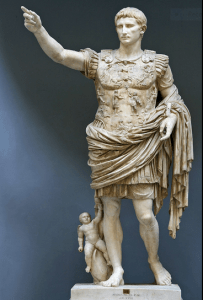 Historians date the start of Octavian’s monarchy to either 31 BCE, when he won the battle at Actium, or 27 BCE, when he was granted the name Augustus. It marked the end of the Roman Republic and the beginning of the Roman Empire.
Augustus ushered in a time of peace. He was emperor for 40 years and died of natural causes in 14 CE, at age 75. His last words are said to have been:
“I found Rome in clay, I left it in marble.”
Upon his death he was immediately succeeded by his adopted son, Tiberius. Tiberius reigned as Emperor between 14–37 CE.
Emperor Caligula Orders Seneca’s Suicide
The third emperor was Caligula, a great-grandson of Emperor Augustus. Caligula’s reign was filed with murder and debauchery. It coincided with Seneca being part of the Senate.
The Roman historian, Cassius Dio, claims that Caligula–who fancied himself to be a great orator–was so angry with Seneca’s success in the Senate that he ordered him to commit suicide. Seneca only survived because he was ill, and Caligula was told that he would die soon.
After only four years as emperor, Caligula was assassinated by members of his bodyguard and the Roman Senate. Upon his death in 41 CE, he was succeeded by his uncle, Claudius.
Emperor Claudius and Seneca’s Exile
Shortly after Claudius became emperor, the new empress, Messalina, accused Seneca of adultery with Julia Livilla, one of Caligula’s sisters. Seneca was found guilty by the Senate and he was forced into exile on the island of Corsica.
At the time, Seneca was already a famous writer and thinker. He continued his work in exile, writing philosophy and drama. True to the stoic philosophy he adhered to, he wrote that, “one man’s exile was but a drop in the sea of human upheaval”.
While in exile he wrote “Of Consolation”. It includes the following passage:
“Death is a release from and an end of all pains: beyond it our sufferings cannot extend: it restores us to the peaceful rest in which we lay before we were born. If anyone pities the dead, he ought also to pity those who have not been born. Death is neither a good nor a bad thing, for that alone which is something can be a good or a bad thing: but that which is nothing, and reduces all things to nothing, does not hand us over to either fortune, because good and bad require some material to work upon. Fortune cannot take ahold of that which Nature has let go, nor can a man be unhappy if he is nothing.”
Seneca as Nero’s Tutor
After eight years of exile, Seneca was given permission to return to Rome to become a tutor to future emperor Nero. This was accomplished through the intervention of Agrippina–the younger sister of Emperor Caligula, the niece and fourth wife of Emperor Claudius, and Nero’s mother.
In his book The Annals of Imperial Rome, Tacitus wrote of his return:
“So she now secured the recall of Lucius Annaeus Seneca from exile and his appointment to a praetorship. She judged that owing to his literary eminence this would be popular. She also had designs on him as a distinguished tutor for her young son Lucius Domitius Ahenobarbus (Nero). Seneca’s advice could serve their plans for supremacy….”
Emperor Nero and Seneca’s Suicide
When Emperor Claudius died—some suspect that Agrippina poisoned him—Nero became emperor at the age of 17. The first five years of his reign have been noted for his successes–he gained a reputation for political generosity and sharing power with the Senate.
During this time, he left most of the ruling to Seneca and his other two advisors: the prefect Sextus Afranius Burrus and his mother, Agrippina. However, Seneca’s influence over Nero—who would become Rome’s most infamous emperor–declined over time.
In 65 CE Seneca was forced by Nero to take his own life for allegedly being complicit in the Pisonian conspiracy to assassinate Nero. He was likely to have been innocent. There are numerous paintings depicting Seneca’s calm and stoic suicide.
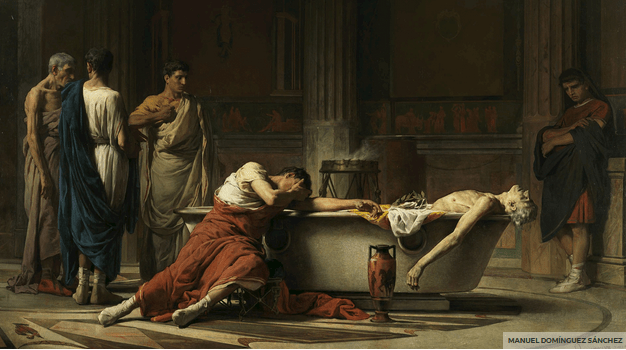
Nero would commit suicide three years later.
Letters From a Stoic
Fortunately, Seneca left behind a great body of work. This includes a dozen philosophical essays, one hundred and twenty-four letters on moral issues, nine tragedies, and a satire.
As stated above, Seneca was a stoic. Stoicism is a philosophy for life which was founded by the pre-Socratic Greek philosopher Zeno (335–263 B.C.E.). Stoicism can be summarized as follows:
Stay calm and serene regardless of what life throws at you, and stop worrying about things which are beyond your control.
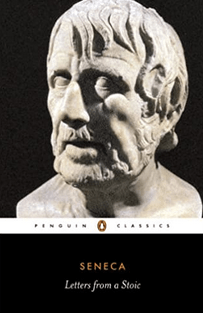 One of Seneca’s most important extant works is Letters from a Stoic. Presumably, it’s a collection of letters Seneca sent to a friend advising him on how to become a better Stoic. However, many scholars believe that Seneca’s letters were really essays in disguise that were meant to be published rather than read by a friend.
The book includes 124 letters discussing Seneca’s Stoic beliefs and his outlook on life, each one on a different topic or issue. Letter 13, for example, is on groundless fears. Here’s a part of that letter:
“What I advise you to do is, not to be unhappy before the crisis comes; since it may be that the dangers before which you paled as if they were threatening you, will never come upon you; they certainly have not yet come. Accordingly, some things torment us more than they ought; some torment us before they ought; and some torment us when they ought not to torment us at all. We are in the habit of exaggerating, or imagining, or anticipating, sorrow.”
Seneca’s “Letters from a Stoic” is a timeless guide on how to live a virtuous and fulfilling life.
3. Meditations by Marcus Aurelius
By 68 CE, Nero was nearly universally despised, and the Senate declared him an enemy of Rome. To avoid the humiliation of capture and execution before the throngs of Rome, Nero killed himself. Since he had no defined heir, the empire was left without an emperor and an immense power-grab ensued.
The year 69 CE is known as the Year of the Four Emperors. It was a year of civil war during which the four most influential generals in the Roman Empire—Galba, Otho, Vitellius and Vespasian–successively vied for imperial power.
 The Year of the Four Emperors
The first to take the Roman throne after Nero’s death was Servius Sulpicius Galba, governor of Hispania (Spain). He was emperor for seven months, from the death of Nero until the 15th of January, 69 CE, when he was assassinated by the Praetorian Guard.
Marcus Silvius Otho, the governor of Lusitania (Portugal), was Galba’s successor. Otho was emperor for three months, from January 15th to April 16th.
As the army of Aulus Vitellius, governor of Lower Germany and another claimant to the throne, advanced toward Rome, Otho chose to take his own life instead of having any more of his men be killed in battle to keep him in power.
Vitellius marched triumphantly into Rome and was named emperor by the Senate. However, his rule lasted for only eight months. Historian Cassius Dio wrote in his Roman History the following:
“Vitellius, addicted as he was to luxury and licentiousness, no longer cared for anything else either human or divine … Now, when he was in a position of so great authority, his wantonness only increased, and he was squandering money most of the day and night alike.”
He soon became unpopular, and many of those who had supported him earlier began to swear allegiance to Titus Falvius Vespasianus (Vespasian), governor of Judea. The armies of the two men met in battle and Vitellius’ men were soundly defeated.
Vitellius tried to flee but was captured, dragged through the streets of Rome, tortured, and killed. His reign had lasted from the 16th of April to the 22nd of December.
Vespasian was the fourth and last of the four emperors. However, his reign was not short-lived like those of his three predecessors. Instead, he ruled for ten years. He was the first of the three Flavian rulers.
The Flavian Dynasty
The reigns of the emperors Vespasian (69–79 CE) and his two sons, Titus (79–81 CE) and Domitian (81–96 CE), comprised the Flavian dynasty.
Vespasian
Under Vespasian, new taxes were devised to restore the Empire’s finances. He also initiated a massive building program, leaving multiple enduring landmarks in the city of Rome.
The most spectacular of these was the Flavian Amphitheater. Better known as the Colosseum, it was begun under Vespasian and finished under his eldest son, Titus. Vespasian died of natural causes in 79 CE and was immediately succeeded by Titus.
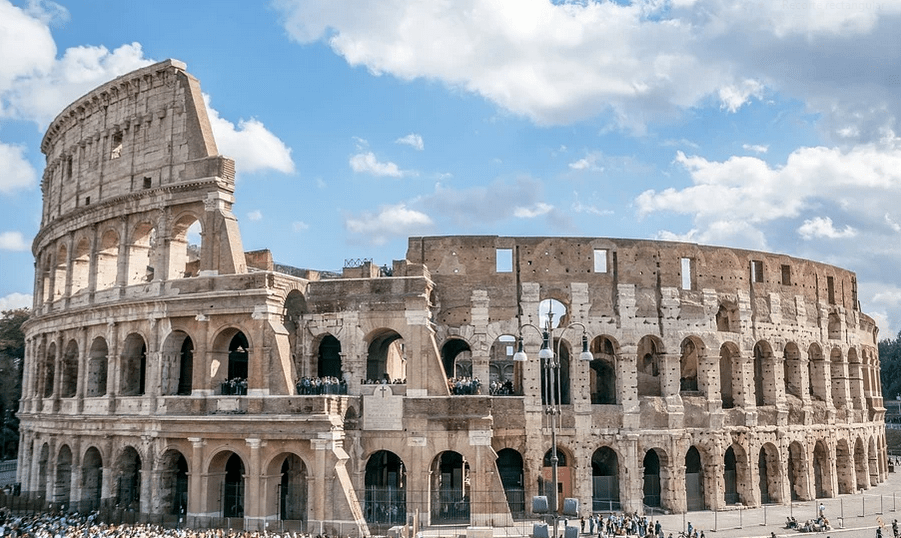
Emperor Titus
Titus was a considered a good emperor, although he only ruled for two years. He is mostly remembered for his generous and decisive action to alleviate the suffering of the victims of the eruption of Mount Vesuvius—of Pompeii fame—in 79 CE.
In addition to finishing the Colosseum, he laid the foundation for what would become the Temple of Vespasian and Titus. He died unexpectedly of a fever and was succeeded by his younger brother, Domitian.
Emperor Domitian
Domitian was declared emperor by the Praetorian Guard the day after Titus’ death, commencing a reign which lasted more than fifteen years. Although historians such as Tacitus, Pliny the Younger and Suetonius depicted him as a cruel tyrant, modern history has rejected these views.
He spent lavishly to restore and embellish the city of Rome, and he laid out the cultural, economic, and political policies that helped bring peace and prosperity to Rome for the following decades. However, although he was popular with the people, he had many enemies in the Senate, and he was assassinated.
Domitian was succeeded by his friend and advisor, Nerva. Nerva was the first emperor of the era of the Five Good Emperors.
The Five Good Emperors
The “Five Good Emperors” were the five rulers who presided over the most majestic days of the Roman Empire from 96 to 180 CE. They were the following:
- Nerva (96 – 98);
- Trajan (98–117);
- Hadrian (117–138);
- Antoninus Pius (138–161); and
- Marcus Aurelius (161–180).
It was not a bloodline. Nerva was raised to the principate by the assassins of Domitian, and the others were successively adopted heirs. Edward Gibbon, author of “The History of the Decline and Fall of the Roman Empire”, had the following to say about these five rulers:
“Their united reigns are possibly the only period in history in which the happiness of a great people was the sole object of government.”
Marcus Aurelius – The Philosopher Emperor
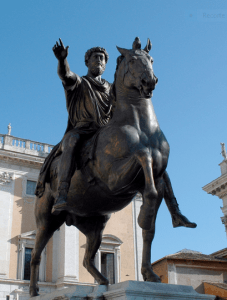
In addition to being one of the “Five Good Emperors”, Marcus Aurelius was a Stoic. One of the most succinct statements of Stoic philosophy that we have available today is the book “Meditations”. It was written by Marcus Aurelius during the last ten years of his life while he was on military campaign.
“Meditations” is a collection of notes Marcus Aurelius wrote for himself as a kind of self-instruction or self-improvement guide. It was a means of practicing and reinforcing his own philosophical convictions.
Several scholars have indicated that the essential substance of “Meditations” comes from Epictetus. Epictetus (c.55–135 CE) was born in Hierapolis (present-day Pamukkale in Turkey) as a slave in a wealthy household. His owner allowed him to study under the Stoic Musonius Rufus, who became his teacher and mentor.
Epictetus obtained his freedom shortly after emperor Nero’s death and proceeded to teach philosophy in Rome for nearly 25 years. This lasted until Emperor Domitian banished all philosophers in Rome and Epictetus was forced to flee. He settled down in Nicopolis, Greece, where he founded a philosophy school. He taught there until his death.
Epictetus died when Marcus Aurelius was about 14 years-old, and it’s highly unlikely he ever met him. However, many of the older people that Marcus Aurelius associated with probably had known Epictetus, or were at least familiar with his teachings.
Meditations
 Although Marcus Aurelius didn’t write it for publication, “Meditations” is one of the greatest texts to have come down to us from classical antiquity. These writings, collected in 12 short books, take the form of quotations varying in length from one sentence to long paragraphs.
In “Meditations”, Marcus Aurelius tries to answer the deep questions about the meaning of life, such as the following:
- Why are we here?
- How should we live?
- How can we deal with criticism?
- What is the best way to handle adversity?
- How does one respond to suffering?
You can read some quotes from “Meditations” on my blog post: “7 Lessons On Life and Happiness From a Stoic (Marcus Aurelius)“.
The first four of the five good emperors had assured that they would be succeeded by good rulers by adopting those they thought could rule best. However, Marcus Aurelius named his son, Commodus, as heir. This would prove to be a mistake.
Commodus is the tyrant portrayed in the movie, “Gladiator”, starring Russell Crowe and Joaquin Phoenix. Although some of the events in the movie are fiction, it’s true that Commodus sought to distract the people of Rome from the fact that the government was broken by constantly hosting gladiator games in the Colosseum.
Other Must-Read Books by the Ancient Romans
Above we discussed three must read philosophy books by ancient Romans. Below I’m going to share with you three must-read poems by ancient Romans, as well as two must-read theology books.
Must-Read Poems by the Ancient Romans
The three most famous poets from ancient Rome are Horace, Virgil, and Ovid. Here’s one work from each that are must-reads:
Here’s a brief description of each:
1. The Odes by Horace (23 BCE)
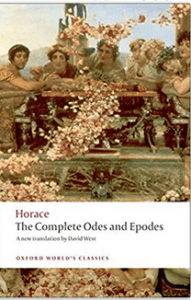 Quintus Horatius Flaccus (65 – 8 BCE), known simply as Horace, was the major lyric Latin poet of the era of Emperor Augustus. Along with his fellow poet, Virgil–whom we will discuss next–, he was a part of Augustus’ inner circle.
Horace wrote Odes, Epodes, Satires, Ars Poetica, Epistles, and Carmen Saeculare. One of Horace’s best-known works are his odes (an ode is a short lyric poem). Horace is unique among classical Roman poets in writing Latin odes based on the meters used by the Greek lyric poets. He was a great admirer of Greek culture, and once said the following:
“Captive Greece took captive her fierce conqueror and instilled her arts in rustic Latium.”
The Odes by Horace is a collection of 103 lyric poems, contained in four books. Books 1 to 3 of “The Odes”–comprising 88 short poems–were published in 23 BCE. A fourth book, consisting of 15 poems, was published in 13 BCE.
Horace’s odes reflect on the Roman world that he lived in. However, they also deal with universal themes, such as friendship, love, the joy of drinking wine, and the inevitability of death. In addition, “The Odes” feel autobiographical since Horace describes his own personal experiences.
The English Victorian poet Alfred, Lord Tennyson, hailed the lines of “The Odes” as:
Jewels five-words-long
That on the stretch’d forefinger of all Time
Sparkle for ever.
2. The Aeneid by Virgil (19 BCE)
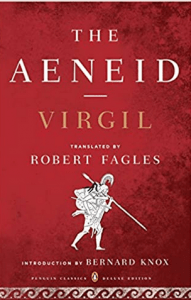 Publius Vergilius Maro (70 – 19 BCE), usually referred to as Virgil, was regarded by the Romans as their greatest poet. The Aeneid–which he wrote during the last 11 years of his life–was his masterpiece. The poem, which was modeled after The Iliad and The Odyssey, was commissioned by Emperor Augustus. Like the Homeric poems, it’s written in dactylic hexameters.
The Aeneid is a founding myth or national epic that ties Rome to the Trojan War. It tells the story of how Aeneas– son of the Trojan prince Anchises and the goddess Venus– escaped the destruction of Troy by the Greeks and led a band of survivors to Italy.
Aeneas and his men mixed with the native populations of Italy and created a new race. Romulus, who would go on to found Rome about 300 years after the time in which The Aeneid is set, was–according to Virgil–a descendant of Aeneas.
Virgil does the following in The Aeneid:
- Explains the Punic Wars (before reaching Italy, Aeneas lands in Carthage due to a storm; he has a love affair with the Carthaginian queen, Dido; he abandons her, which leads her to proclaim endless hate between Carthage and the descendants of Troy; she then kills herself);
- Reflects Roman values and religious traditions;
- Evokes the foundation of Rome from the ashes of Troy to the age of Augustus;
- Explains how a good Roman should live and deal with challenges; and
- Legitimizes the Julio-Claudian dynasty (Augustus, Tiberius, Caligula, Claudius, and Nero) as descendants of the founders, heroes, and gods of Rome and Troy.
Some accounts claim that Virgil, learning that he would die before being able to properly revise “The Aeneid”, asked that it be burned upon his death. However, Emperor Augustus had the epic published despite the poet’s last wishes.
3. The Metamorphoses by Ovid (8 CE)
 Publius Ovidius Naso (43 BCE – 17 CE), commonly known as Ovid , was one of the most prolific writers of the early Roman Empire. Although he had a highly successful career as a poet and was beloved by the people of Rome, he made the mistake of angering Emperor Augustus and was banished from Rome. Thus, he spent the last 11 years of his life in exile.
“The Metamorphoses”, a 15-book epic, was his masterpiece. It’s a retelling of the ancient myths, spanning from the beginning of the world to the deification of Caesar, which occurred around the time that Ovid was born. The poem contains 250 myths, and the main theme of these myths is transformation.
Must-Read Theology Books by the Ancient Romans
Both of the must-read theology books that I’m going to share with you are by St. Augustine (354 – 430 CE). He is one of the Latin Fathers of the Church and perhaps the most significant Christian thinker after St. Paul the Apostle. The two books are:
Here’s a little about each one:
1. The Confessions (Augustine of Hippo, 400 CE).
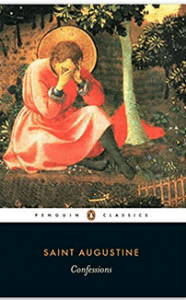 Although Ancient Rome started out as a polytheistic culture that worshipped gods similar to the Greek pantheon, by the end of the 4th century CE the Roman Empire was Christian. Here’s how that happened:
- In 313 CE, Emperor Constantine–the first Roman emperor to convert to Christianity– issued the Edict of Milan. It established religious tolerance for Christianity–as well as most other religions–within the Roman Empire.
- Then, in 380 CE, Emperor Theodosius issued the Edict of Thessalonica which made Christianity the official religion of the Roman Empire.
When Augustine was born in 354 CE in Tagaste, a Roman province that is now modern-day Algeria, Christianity was on the rise throughout the empire. Augustine’s mother, who would later be canonized as St. Monica, was a devout Catholic. However, for many years, Augustine followed the controversial Manichaean religion and lived a hedonistic lifestyle.
When Augustine was 32 years-old, he underwent a profound personal crisis which led him to make the decision to convert to Christianity and devote himself entirely to serving God. “The Confessions”—which Augustine wrote in his 40s when he was Bishop of Hippo–is an autobiographical account of his spiritual journey. He talks about his restless youth, his vain and dissolute life, and his stormy spiritual voyage.
The climax of the book comes with Augustine’s conversion as narrated in Book 8. He was walking in a garden when, by God’s providence, he heard the voice of a child chanting, “Pick up and read. Pick up and read.” Augustine interpreted this as a divine commandment to pick up the Bible which he had with him, open it at random, and read the first chapter he found.
He quickly opened his Bible. The first passage his eyes landed on was Romans 13:13-14: “Not in riots and drunken parties, not in eroticism and indecencies; not in strife and rivalry, but put on the Lord Jesus Christ and make no provision for the flesh in its lusts”. Here’s what Augustine writes about that moment:
“[I]instantly, as the sentence ended, there was infused in my heart something like the light of full certainty and all the gloom of doubt vanished away.”
By analyzing his own life in “The Confessions”, Augustine was analyzing the nature of sin and teaching others the power of redemption and the path back to God. “The Confessions” is one of the most influential books in the Catholic religion, apart from the Bible.
2. The City of God (Augustine of Hippo, 426 CE)
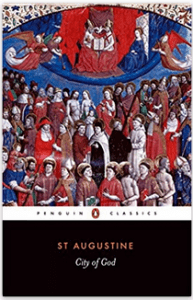 In 410 CE, Rome—the Eternal City–was sacked for the first time in nearly 800 years. The Visigoths– led by their king, Alaric– left Rome in smoking ruins. The Romans were shaken to their very core. After all, the sacking was symbolic of the crumbling Roman Empire.
Those who believed in the waning pagan faith claimed that the gods had abandoned Rome because the Romans had embraced Christianity. This prompted St. Augustine to begin writing “The City of God” in 413.
In his book Augustine argued that not only was Christianity not responsible for the sacking of Rome, but that it was Christianity that had saved Rome. As evidence he cited the fact that the barbarians had sparred people who had hidden in churches.
Augustine refers to Rome as a city of men. He explains that all the cities of men eventually fall.
On the other hand, the City of God is stable, eternal, and the source of ultimate consolation. At the same time, Christianity is the path to the City of God, and the love of Christ is the guiding star. Although this is Augustine’s main thesis, he wrote “The City of God” in 13 years and included many other topics in his book.
“The City of God” has been incredibly influential since it was first written and published, but never more so than during the Middle Ages. The Middle Ages began after the fall of the Western Roman Empire, about 46 years after the death of St. Augustine.
In his masterpiece, Augustine provided the justification the Catholic Church needed to rise in political power during the Middle Ages. After all, Augustine argued that it was the church, not the rulers, that had divine authority.
Conclusion
Ancient Rome grew from a town on central Italy’s Tiber River into an empire that, at its peak, encompassed most of continental Europe, Britain, much of western Asia, northern Africa and the Mediterranean islands.
Here are some of the legacies of Ancient Rome:
- The widespread use of Romance languages derived from Latin (Italian, French, Spanish, Portuguese and Romanian);
- The modern Western alphabet;
- The modern calendar; and
- Christianity as a major world religion.
Live your best life by reading the ancient Roman philosophers and poets.








 Related Posts:

















 10. Fill Out the Proust Questionnaire
 In 1980, Carl Sagan–one of the world’s most famous astronomers–hosted and narrated


 Marelisa Fabrega is a lawyer and entrepreneur. She holds a Bachelor of Science in Business Administration from Georgetown University in Washington, D.C., as well as a Juris Doctor from the Georgetown University Law Center. You can learn more about her